
How to budget for a city break: costs and money-saving tips
Get the most bang for your buck on a European city break. Follow our tips for planning ahead and travelling Europe on the cheap.
Published: 8 July 2026
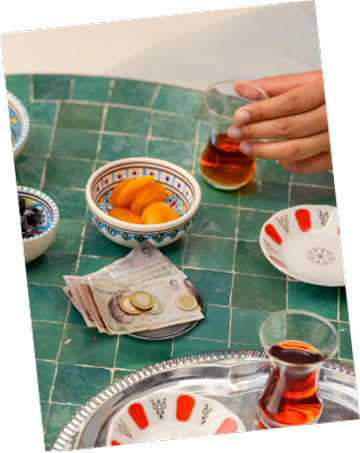
Get the most bang for your buck on a European city break. Follow our tips for planning ahead and travelling Europe on the cheap.
Published: 8 July 2026
To plan your trip, you need to start with a rough idea of the costs involved. To help you do this, here are some rough daily costs for a city break in a cheaper European city (think Lisbon, Krakow, or Prague).
|
Accommodation |
Budget hostel |
£15-£25 |
|
Budget private room or guesthouse |
£35-£55 |
|
|
Food & drink |
Street food/market lunch |
£3-£6 |
|
|
Sit-down budget restaurant (dinner) |
£8-£15 |
|
|
Coffee |
£1.50-£3 |
|
|
Groceries for a day (self-catering) |
£8-£12 |
|
Transport |
Public transport day pass |
£2-£5 |
|
|
Ride-share (short trip) |
£3-£7 |
|
Activities |
Many museums/galleries |
£3-£8 |
|
|
Walking tours (tip-based) |
£0-£10 |
|
|
One paid attraction (like a castle or thermal baths) |
£8-£20 |
|
Style of travel |
Daily cost (per person) |
|---|---|
|
Ultra-budget (hostel, self-catering, free sights) |
£35–£50 |
|
Mid-budget (private room, eat out twice) |
£65–£90 |
|
Comfortable budget (nice hostel or guesthouse, all meals out, one activity) |
£90–£120 |
Don’t forget your travel insurance - we offer a range of travel insurance to suit different trips. Buying travel insurance in advance could help protect you from unexpected costs before you travel, and while you’re away.
From choosing when and how you travel, right down to your lunch plans, these are the best ways to make your money go further.
1. Travel in the shoulder season. March to May and September to October are the sweet spot - decent weather, fewer crowds, and flights and hotels are noticeably cheaper than in July and August. Avoiding school holidays helps too.
2. Fly smart with budget airlines. Ryanair, easyJet, Wizz Air, and Vueling offer the cheapest flights to European cities. Book 6 to 10 weeks ahead, fly mid-week, and pack light to avoid bag fees, as those can easily double the fare.
3. Stay in well-reviewed hostels or aparthotels. Modern hostels have private rooms that rival budget hotels at lower prices. Aparthotels with kitchenettes let you self-cater for at least one meal a day, which can add up to a good saving over a trip.
4. Have some local currency in cash. Although card payments are the norm across Europe, some cash can be handy to get the best value food and drink. Markets and street food stalls are often cash-only, and some small independent bars and restaurants in Eastern Europe still prefer cash.
5. Use public transport, not taxis. Metros, trams, and buses in European cities are excellent and very cheap. A day pass typically costs £2-£5. Taxis and Ubers add up quickly and are rarely necessary if you suss out the public transport.
6. Buy a city card. Most major cities offer a tourist card that bundles unlimited public transport with free or discounted museum entry. If you're planning more than two or three paid activities, they usually pay for themselves.
7. Prioritise free attractions. Many of Europe's best experiences cost nothing. Most national museums in Europe are free, along with famous markets, parks, cathedrals, and city walks. It’s easy to build an itinerary around free things with paid attractions as an odd extra.
8. Do a free walking tour. Every major city has tip-based walking tours. You get 2-3 hours of history and local culture, and pay what you think it was worth. These can be a great way to find your way around on your first day.
9. Drink and snack like a local. Tourist hotspot streets whack up their prices. Go one or two streets back, shop at supermarkets for snacks and breakfast, and drink at local bars rather than anywhere with an English-language sign outside. In cities like Prague or Belgrade, you can find a local beer for a quarter of the price in the UK.
10. Consider booking accommodation and flights separately. Package holidays can sometimes offer good value or convenience, but booking flights and accommodation separately can often work out cheaper and gives you more flexibility.
Bonus tip: use our Multi-currency Cash Passport Travel Money card for all your spending. Using a travel money card can help you avoid foreign transaction fees that some bank cards may charge, which may help reduce overall spending while travelling.
Research* shows that Europe’s most visited cities include all the usual suspects – the classic European city break destinations. Because of their popularity, they can have a reputation for being expensive, and there are many tourist traps to avoid. But with these budget travel tips, you can plan a trip that doesn’t cost an arm and a leg.
Use the museum pass and free museum combo
Many of Paris's greatest museums are completely free, all year round. This includes the Musée Carnavalet, Petit Palais, Maison de Victor Hugo, and the permanent collections at many others. On the first Sunday of every month, big names like the Louvre, Musée d'Orsay, and Centre Pompidou drop to free entry - though expect to join a queue.
If you want to go beyond the free tier, the Paris Museum Pass covers over 50 museums including the Louvre, Versailles, and Sainte-Chapelle, and - best of all - lets you skip the queues. At peak times, this can save you an hour or more.
Once you’ve worked up an appetite, do like the locals and…
Eat and drink standing up, or take away
In some French cafés and brasseries, prices can vary depending on whether you order ‘au comptoir’ (at the bar or standing) or ‘en salle’ (seated at a table), with table service sometimes costing a little more. Ordering au comptoir or taking food to go can therefore be a more affordable option to consider, particularly in busy tourist areas. For example, you could pick up a crêpe or a jambon‑beurre baguette from a local boulangerie and enjoy it on a bench by the Seine for a simple, quintessentially Parisian lunch.
Never eat dinner at dinner time
Locals rarely sit down before 9.30pm-10pm in Madrid. So restaurants catering to tourists fill up at 7pm and charge tourist prices. But between 2pm–4pm, almost every neighbourhood restaurant offers a ‘menú del día’ - a full three courses with bread and a drink for less than half the price of dinner in the same restaurant.
How to make the most of this
Do this every day and you'll eat very well in Madrid for the cost of a supermarket meal back home.
Drink from the ‘nasoni’, and learn the one-block rule
Rome has over 2,500 free drinking fountains scattered across the city - the little metal spouts locals call ‘nasoni’ (big noses). This refreshing drinking water runs continuously and comes from the ancient aqueduct system that has supplied Rome for centuries.
Buying bottled water in a tourist city adds up fast, so a refillable bottle and Rome's free fountains save a small fortune over a few days, in a uniquely Roman way.
The biggest money saver in Rome is the one-block rule
The price gaps from the tourist tax in Rome can be huge. A coffee sitting down facing the Pantheon can cost 3-4 times more than coffee in a bar serving locals, one block away. This is true around all the major sights - the Trevi Fountain, Piazza Navona, the Colosseum. Walk just one block away and your money goes much further.
Milan is the one Italian city where the aperitivo hour is your meal plan
Milan invented modern aperitivo culture, and it remains one of the great budget travel hacks in Europe.
Between roughly 6pm-9pm, a huge number of bars across the city operate on a simple deal. Buy one drink - typically €8-€12 for a Aperol Spritz, Negroni, or soft drink - and you get unlimited access to a buffet that can range from olives and crisps in cheaper places to pasta, risotto, bruschetta, cured meats, cheese, and hot dishes in the better ones.
Choose the right Milanese bar, and the aperitivo buffet is a full dinner disguised as a drink.
The Albert Cuyp Market and supermarket strategy
The Albert Cuyp Market in De Pijp is Amsterdam's best daily street market, serving stroopwafels, herring, fresh bread, and hot snacks, all at local prices. The food is excellent and authentically Dutch as it gets. Just remember to have some Euros cash with you, as not all vendors take card payments. Another good option is the Albert Heijn supermarket. They’re all over the city and have great budget lunch options.
See the best of the city on foot for free
Amsterdam's small, flat city centre is best explored on foot. The canal ring, the Jordaan neighbourhood, and Vondelpark are all completely free to experience at your own pace.
Whether it’s a pint in Prague or patisserie in Paris, get a feel for how far your travel money might go with our foreign currency guides.
Buy your currency easily online. Or pick up in-store when you’re doing the weekly shop.
To learn more about taking cash abroad, take a look at our guide - Why you still need travel money abroad.
Exchange rates may vary during the day. Rates will vary whether you're buying in-store, online or over the phone. They'll also vary depending on whether you're buying cash or a prepaid currency card.
We buy back most currencies we sell in most banknote values. Excludes closed currencies.
Buy Travel Money online or in-store and get a better rate with your Clubcard. Choose from up to 50 currencies in cash or add up to 22 currencies to a Multi-currency Cash Passport card.
Clubcard Prices are available on the sell rate of a currency and only for currencies in stock online on the day you buy. The Clubcard Price will be better than the standard rate advertised online.
When buying online, you must enter a valid Clubcard number to get the Clubcard Price rate. Exchange rates may vary depending on whether you’re buying in-store, online or over the phone.
Clubcard Prices apply to the sell rate on foreign currency notes. The Clubcard Price will be better than the standard rate advertised online. Clubcard data is captured by Travelex on behalf of Tesco Travel Money.
See our privacy policy to find out more.
We won’t charge you a card handling fee, no matter how you buy your travel money - whether it be in-store, online or over the phone.
However, your credit or debit card provider may charge fees for currency transactions - for example, cash advance or other fees. So, if you’re not sure, it’s best to check with them before you buy.
You can cancel a Click+Collect order any time before your collection date. We'll refund the full amount you paid in Pounds Sterling.
However, if you cancel less than 24 hours before your collection date, we'll charge you a £10 late cancellation fee and deduct this from your refund.
We can’t refund any fees charged by your card provider, so please contact them if you have any questions about that.
It couldn’t be simpler. Just pop into one of our in-store Travel Money Bureaux when you get home.
We buy back:
It doesn't matter where you bought your travel money - even if it wasn’t from us - we'll still buy it back.
Please note:
If you find a better exchange rate from another provider, we'll match it at a Travel Money Bureau in-store. As long as it’s:
Price Match only applies in-store on a like-for-like basis on sell transactions. It doesn’t apply to exchange rates advertised online or by phone.
This is not available in conjunction with any other offer. We reserve the right to check the rate you’ve found and the 3-mile distance from our store (using a standard route planning tool).
Tesco Travel Money is provided by Travelex.
Tesco Travel Money ordered in store is provided by Travelex Agency Services Limited. Registered No. 04621879. Tesco Travel Money ordered online or by telephone is provided by Travelex Currency Services Limited. Registered No. 03797356. Registered Office for both companies: Worldwide House, Thorpewood, Peterborough, PE3 6SB.
Multi-currency Cash Passport is issued by PrePay Technologies Limited pursuant to license by Mastercard® International. PrePay Technologies Limited is authorised by the Financial Conduct Authority under the Electronic Money Regulations 2011 (FRN: 900010) for the issuing of electronic money and payment instruments. Mastercard is a registered trademark, and the circles design is a trademark of Mastercard International Incorporated.
Tesco Travel Insurance is arranged and administered by Rock Insurance Services Limited and underwritten by AWP P&C S.A.